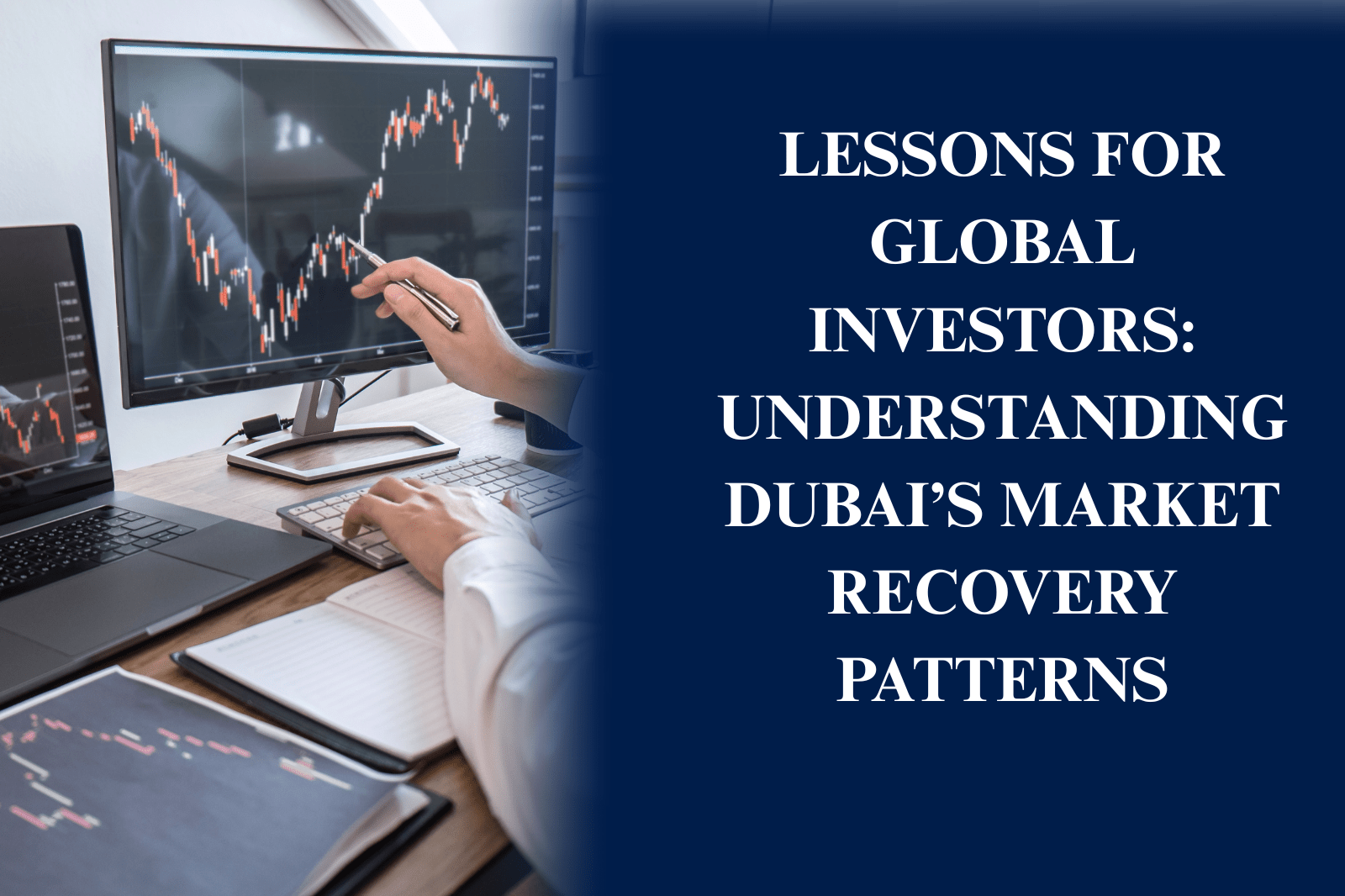




Lessons for global investors: understanding Dubai’s market recovery patterns provide key highlights for global investors.
For global investors, understanding how markets behave through cycles is essential to making informed decisions. Real estate markets rarely move in a straight line, rather, they respond to economic shifts, global sentiment and policy changes. Dubai’s property sector is a clear example of this dynamic pattern, with phases of strong expansion often followed by market adjustments that help rebalance prices and support sustainable long-term growth.
What makes Dubai particularly notable is not the presence of cycles, but the strength of its recovery phase. Each adjustment period has historically led to a more structured, transparent and investor-friendly environment. This pattern has reinforced confidence among foreign buyers who view the market not just for short-term gains, but for its long-term resilience and adaptability.
How Dubai’s Real Estate Sector Evolved after its First Crisis?
Dubai’s property market faced its first major challenge during the 2008 global financial crisis. Like many international markets, Dubai experienced a sharp decline after years of rapid growth. Property prices fell by more than 50% from their peak, according to several market reports.
Instead of weakening the sector permanently, the crisis pushed Dubai to reform its property market. The government introduced stronger regulations to protect investors and improve market stability.
The government implemented mandatory Escrow Account Protection to ensure developers used buyer funds only for project construction. Regulators such as the Dubai Land Department and Real Estate Regulatory Agency increased oversight and improved transparency across the sector. Officials also introduced stricter mortgage caps to reduce speculative lending and limit excessive borrowing.
These measures strengthened investor confidence and helped Dubai build one of the region’s most transparent and investor-focused real estate markets.
The recovery that Reshaped Global Confidence
By 2012, Dubai’s property market had made a strong recovery. Improved regulations and higher transparency restored investor confidence. Many international investors who had left during the crisis began returning to the market.
Property prices rose steadily throughout the mid-2010s. Strong infrastructure growth and rising interest in property in Dubai supported this momentum.
Key Drivers Behind the Recovery
Several long-term factors helped strengthen the market:
- Expansion of the Dubai Metro improved connectivity across major districts.
- Large infrastructure projects supported the growth of new communities.
- Global attention towards destinations like Palm Jumeirah investor interest.
The Impact of Expo 2020
Dubai also prepared for Expo 2020, one of the city’s largest international events. The project attracted major investment across different sectors and districts.
The development of Expo City Dubai boosted construction activity and strengthened Dubai’s global reputation as an investment destination. The recovery after 2008 changed how global investors viewed Dubai’s real estate market. It proved the city could adapt, recover and grow stronger after major challenges.
However, like every global market, Dubai soon faced another major test.
The 2020 Pandemic: A Major Test for Dubai’s Property Market
The global pandemic in 2020 disrupted markets around the world. Tourism slowed down, international travel stopped, and investment activity declined across many sectors. Real estate markets in several major cities faced long periods of uncertainty and weak demand.
Dubai’s property market responded differently.
Why did Dubai Remain Attractive?
Dubai continued to attract global investors and professionals during the crisis. The city offered a tax-free environment, strong infrastructure and high safety standards. These factors made Dubai an appealing choice for entrepreneurs, remote workers and foreign families looking for stability.
At the same time, long-term residency initiatives increase confidence among foreign buyers and investors.
Turning Crisis into Opportunity
Dubai’s strong global connectivity and access to major international markets helped support a faster recovery. Instead of slowing for years, investors’ activity started returning within months.
By 2021, property transactions began rising again as demand strengthened across the market.
The Post-Pandemic Growth Phase
Between 2021 and 2025, Dubai’s real estate market experienced one of its strongest growth periods in recent decades. Investor demand increased rapidly, and transaction activity expanded across commercial and residential areas.
Long-Term Growth Drivers
Several key factors supported this momentum.
The government introduced the Dubai Economic Agenda D33, a long-term plan aimed at doubling the size of Dubai’s economy over the next ten years. The strategy strengthened inverter confidence and encouraged business expansion across multiple industries.
The Expansion of Expo City
Dubai also transformed the former Expo 2020 site into Expo City Dubai. This development created new residential, commercial, and business opportunities while expanding the city;’s economic reach.
An Evolving Real Estate Ecosystem
At the same time, Dubai’s real estate sector continued to evolve. Developers introduced new projects, improved community planning and focused more on long-term sustainability and investor needs.
Innovation and Growth in Dubai’s Property Market
During 2024 and 2025, innovation continued transforming Dubai’s real estate sector. One major development was real estate tokenization, which allows property ownership to be digitally divided and traded. This technology opened the market to a wider group of international investors.
Rising Property Values
Property prices increased by nearly 60-70% between 2021 and 2025. Strong international demand and rapid growth supported this rise.
Luxury communities recorded some of the highest gains, especially waterfront destinations lie Palm Jumeirah.
A Key Lesson for Global Investors
The market recovery also highlighted an important investment lesson. Investors who stayed patient during the correction period often benefited once stability returned and demand increased again.
Strong rental demand and competitive return further strengthened Dubai’s position as a leading global real estate investment destination.
The expected Market Slowdown in 2026
After years of strong growth, analysts expect Dubai’s property market to slow down slightly in 2026. Market estimates suggest residential prices could see a moderate correction of up to 15%. A large number of new housing units entering the market may drive this adjustment.
A More Stable Market Environment
However, today’s market operates very differently from past cycles. Dubai now has stronger regulations, higher transparency and a more diversified economy.
Authorities have introduced several safeguards that improve market stability and reduce risk.
Key Protections Supporting the Market
Some of the most important protections include:
- Escrow account systems that protect buyer investments
- Strict project oversight to improve development standards
- Mortgage caps that limit excessive lending
- Greater transparency through the Dubai Land Department and Real Estate Regulatory Agency.
These measures help reduce the risks that once increase market volatility.
The expected slowdown shows a supply adjustment rather than a structural weakness in Dubai’s property market.
Why Dubai’s Property Market Still Attract Investors?
Even during slow market phases, Dubai continues to attract local and international investors. Several long-term advantages support the city’s real estate market and strengthen investor confidence.
A Tax-Friendly Investment Environment
Dubai offers one of the world’s most attractive tax environments. Investors do not pay personal income tax or capital gains tax. This allows property buyers to keep a large share of their profits and rental returns.
Strong Global Connectivity
Dubai’s strategic location connects major markets across Asia, Europe and Africa. The city also benefits from one of the world’s busiest international aviation hubs, making global travel and business access easier for investors.
Continuous Infrastructure Development
The government continues investing in infrastructure projects across the city. Meteor expansions, logistics networks and smart city technologies support long-term economic and real estate growth.
Long-Term Residency Programs
Long-term residency initiatives have also increased the confidence of investors. These programs encourage buyers to build strong long-term connections with the city and contribute to the stability of Dubai’s real estate sector.
Developers are Responding to Changing Investor Expectations
As Dubai’s property market matures, developers are adjusting their strategies to meet evolving buyer demands.
Today’s investors prefer projects that offer affordability, flexible payment structures and dependable delivery schedules. Developers that respond to these expectations often perform better in competitive market conditions.
AL Riyady Properties has gained strong attention by introducing buyer-friendly payment options and flexible investor-focused models that support long-term demand and buyer confidence.
The Pattern in Clear
History shows a consistent trend, in Dubai’s property market, corrections act as transitions rather than setbacks.
Each slowdown has led to stronger regulations, better infrastructure and renewed confidence among investors. This cycle reflects the UAE’s long-term market resilience, now widely recognised by global investors.
Market adapts, policies improve and infrastructure grows, each cycle begins from a stronger foundation than before.
Key Takeaway
Over the past 20 years, Dubai;s real estate market has shown a clear pattern. It adjusts, reforms and comes back stronger each cycle. The reforms after 2008 reshaped the system. The pandemic period brought new global demand. Each phase improved long-term stability.
As the market moves into a natural cooling phase in 026, the overall direction remains positive.
Strong infrastructure spending continues. The Dubai Economic Agenda D33 supports long-term growth. International demand for property in Dubai also stays steady.
These fundamentals keep the market resilient. For investors, history has already answered the question of recovery. Dubai Recovers.
The real focus now is the next growth phase and how strong it will become.